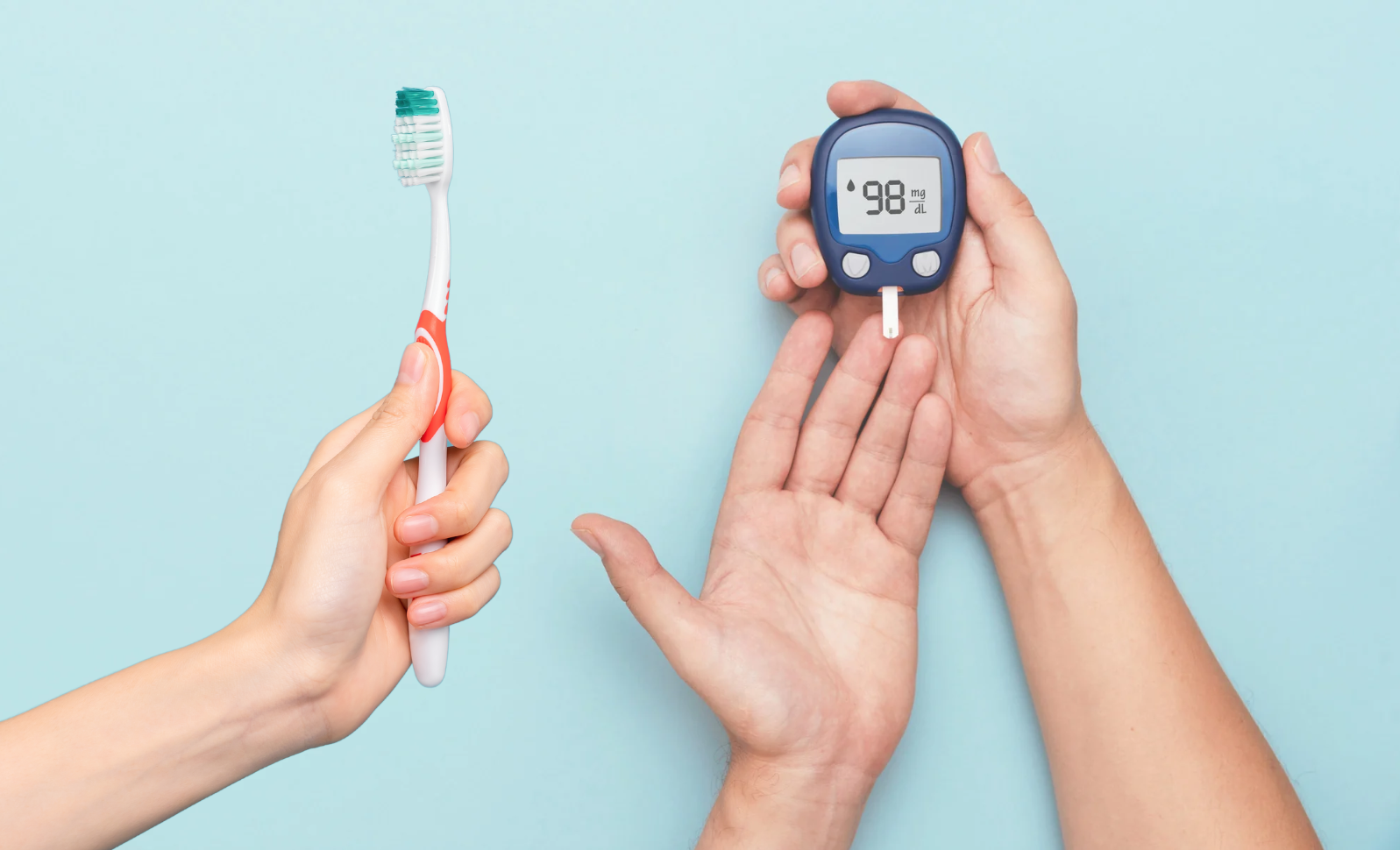
When you think about managing diabetes, your mind may go straight to blood sugar monitoring, medication, nutrition, and exercise. But there’s another important part of your overall health that shouldn’t be overlooked: your oral health.
Your teeth and gums are closely connected to your overall health, and research shows there is a two-way relationship between diabetes and gum disease. That makes regular dental care more than just a way to maintain a healthy smile. It can also be an important part of managing your health.
The Connection Between Diabetes and Oral Health
People with diabetes are more likely to experience oral health problems, particularly gum disease (also known as periodontal disease). When blood sugar levels are elevated, the body’s ability to fight infections can be weakened, making it harder to keep gums healthy and allowing infections to become more severe or take longer to heal.
Diabetes can also contribute to:
- Gum disease: Red, swollen, tender, or bleeding gums can be early signs of gum disease.
- Dry mouth: Reduced saliva can increase the risk of cavities and oral infections.
- Tooth decay: Changes in saliva and elevated blood sugar can contribute to an environment where cavity-causing bacteria thrive.
- Slow healing: Dental infections and oral procedures may take longer to heal, particularly when blood sugar is not well controlled.
The relationship works both ways. Gum disease can increase inflammation in the body and make blood sugar levels more difficult to manage. Treating gum disease may also help improve blood sugar control for some people with diabetes.
How Your Dental Benefits Can Help
One of the best ways to protect your oral health is to take advantage of the dental benefits available through your employer-sponsored plan.
Your dental coverage can help make preventive care and necessary treatment more accessible and affordable. Depending on your plan, benefits may include:
Routine Exams and Cleanings
Regular dental exams and professional cleanings help remove plaque and tartar buildup, identify early signs of gum disease, and catch potential problems before they become more serious. Preventive services are often covered at a higher benefit level, making it easier to stay current with routine care.
Periodontal Evaluations and Treatment
If you have diabetes, monitoring your gum health is especially important. Your dentist can evaluate your gums for signs of inflammation or infection and recommend treatment when needed. Depending on your coverage, periodontal services, such as deep cleanings (scaling and root planing), may be covered under your dental plan.
Early Detection
Routine dental visits give your dentist an opportunity to identify potential concerns, including gum inflammation, persistent dry mouth, cavities, and oral infections. Addressing these issues early can help prevent more extensive and costly treatment down the road.
Access to Ongoing Care
For some people with diabetes, more frequent dental visits or periodontal maintenance may be recommended. Understanding your dental benefits can help you plan for ongoing care and make the most of your coverage.
Remember: Dental coverage varies by plan. Review your specific benefits to understand covered services, frequency limitations, deductibles, coinsurance, and annual maximums.
Make Dental Care Part of Your Diabetes Management Plan
If you have diabetes, a few simple habits can help protect your teeth and gums:
- Brush at least twice a day using fluoride toothpaste.
- Floss daily to remove plaque and food particles between your teeth.
- Keep up with regular dental exams and professional cleanings.
- Let your dentist know you have diabetes, what medications you take, and whether your blood sugar has been difficult to manage.
- Watch for warning signs, including bleeding or swollen gums, persistent bad breath, loose teeth, or ongoing dry mouth.
- Follow your healthcare provider’s recommendations for managing your blood sugar.
If you notice changes in your oral health, don’t wait until your next routine appointment to bring them up with your dentist.
Don’t Overlook Your Dental Benefits
Managing diabetes involves more than monitoring blood sugar. It means taking a comprehensive approach to your health, and your oral health deserves a place in that conversation.
Your dental benefits are an important resource that can help you access preventive care, identify potential problems early, and get the treatment you need to maintain healthy teeth and gums.
This Diabetes Awareness Month, make your dental health a priority. Schedule your next dental appointment, review your dental coverage, and talk with your dentist about how your oral health may be connected to your overall health.
A healthier smile is an important part of a healthier you.