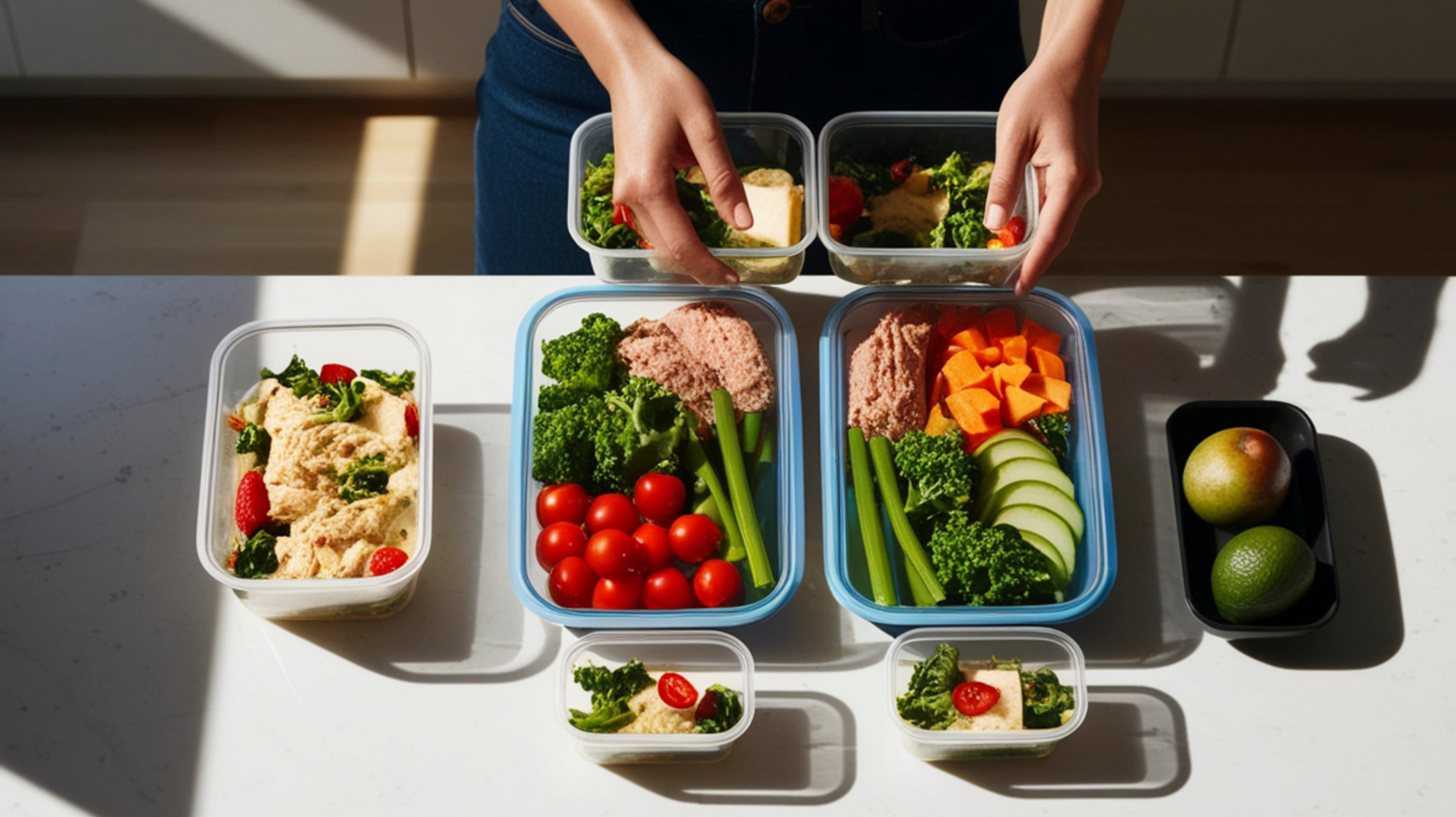
Meal prep has become more than a trend, it’s a time-saving, stress-reducing strategy for anyone trying to balance a busy life with healthy eating. Whether you’re juggling work deadlines, family responsibilities, workouts, or simply trying to avoid the “What’s for dinner?” panic at 6 p.m., a few smart meal‑prep habits can transform your week.
Let’s get you organized – without spending your entire Sunday in the kitchen prepping. Here are some simple, realistic strategies to get started.
Start with a Flexible Weekly Plan
A good plan doesn’t mean a strict plan. Instead, map out
- 2–3 easy lunches
- 2–3 dinners
- Snacks and grab-and-go items
Think of it as your menu board, not an assignment. Leave space for spontaneous takeout, dinner dates, or leftovers so you don’t feel boxed in.
Tip: Write your menu on your fridge or use a digital planner – seeing it helps you stick to it.
Build a Smart Grocery List
Create your list based on your menu and organize it by category.
- Produce
- Proteins
- Dairy
- Freezer items
- Pantry staples
This keeps grocery runs fast and prevents impulse buys that lead to cluttered cabinets and food waste.
Tip: Keep a running list throughout the week. When you use the last of something, add it right away.
Prep Ingredients – Not Entire Meals
Many people assume meal prep means five identical containers of the same meal, like chicken, broccoli, and rice.
Chop veggies, cook grains, and marinate proteins. Focusing on ingredient prep gives you variety and flexibility throughout the week.
Choose Recipes that Overlap Ingredients
To save time and money, let ingredients do double duty:
- Roasted chicken becomes tacos, salads, or pasta
- A pot of quinoa becomes bowls, stir-fries, or sides
- Chopped veggies can work in omelets, wraps, and soups
You’re not eating the same meal—just using the same building blocks creatively.
Invest in Containers You Like Using
Good containers are the unsung heroes of meal prep. Look for:
- Clear, stackable glass containers
- Small jars for snacks or dressings
- Leakproof containers for lunches
If storage is easy, cleanup is easy. If cleanup is easy, meal prep becomes a habit.
Schedule a Prep Window that Fits Your Schedule
Meal prep doesn’t have to be a Sunday marathon. Try:
- Weeknight 45-minute sessions
- Splitting prep between two days
- Morning prep for nighttime ease
Consistency matters more than timing.
Embrace Healthy Shortcuts
Pre‑washed greens, frozen veggies, rotisserie chicken, and canned beans save time and still support healthy eating. Meal prep is about making your life easier—not proving you can do everything from scratch.
Prioritize Flavor
Flavor boosters like citrus, fresh herbs, spice mixes, sauces, or toasted seeds or nuts can make meal prep exciting. When your meals taste great, you’re far more likely to stick to them.
Keep a “Back-Pocket” Meal for Busy Days
Even with the best plan, life happens. Keep ingredients on hand for a 10‑minute meal:
- Stir‑fry veggies + frozen rice + soy sauce
- Pasta + jarred sauce + frozen spinach
- Tortillas + beans + cheese + salsa
Meal prep isn’t about being perfect; it’s about setting your future self up for less stress, better nutrition, and easier evenings. Start small, build a few habits at a time, and watch your kitchen transform from chaotic to effortlessly organized.